Thursday, April 26, 2007

Planet Hunters Edge Closer to Their Holy Grail

Here is more information on yesterday's blog


Larger photo

Planet Hunters Edge Closer to Their Holy Grail

By Ker Than
Staff Writer
posted: 24 April 2007
http://www.space.com/scienceastronomy/070424_exoplanet_side.html

05:52 pm ET

The announcement that a small Earth-like planet has been found within the habitable zone of a distant star is the result of more than a decade-long search for worlds like our own.

The first planets outside our solar system were spotted in 1990 and were in some sense a disappointment. They were dead worlds, in orbit around a spinning stellar corpse that bathed them with deadly radiation. The first planet circling a normal star outside our solar system was not discovered until 1995. This enormous gas giant called Peg 51 b hugged its star tighter than Mercury does our Sun, so it hardly resembled Earth or afforded conditions friendly to life.

Fast forward 12 years and the number of extrasolar planets, or “exoplanets,” has swelled to nearly 230. The latest discovery shows planet-hunting scientists are closing in on the Holy Grail of their field: finding another world like our own.

The new world, called Gliese 581 C, is only about five times the mass of Earth. It lies within the habitable zone of its tiny red parent star and can thus sustain liquid water on its surface, and with it, possibly life.

A dizzying variety

Gliese 581 C is only the latest (and smallest) in a dizzying variety of alien worlds known so far. There are now known exoplanets that orbit normal stars, giant stars, dwarf stars, dead stars, double stars, and even triple stars. Some orbit no stars at all, floating freely through space.

There are water worlds, blistering gas giants, and even potentially rocky planets like our own. One has even been photographed.

There are young planets possibly less than one million years old and ancient worlds nearly 13 billion years old. There are close worlds only 10.5 light years away and remote ones an incredibly far 28,000 light-years distant.

Planet hunting techniques


The scores of newly identified exoplanets are the result of the numerous techniques now available to planet-hunting scientists. Peg 51 b was discovered using the radial velocity technique whereby astronomers look for slight wiggles in a star’s motion caused by the gravitational tug of orbiting planets. This so-called wobble technique was also used to spot Gliese 581 C.

The transit method, another tool used by planet hunters, requires that a planet pass directly in front of its star as seen from Earth. The planet blocks some of the star’s light that would reach Earth, and this slight dip in starlight can be used to calculate the planet’s size.

Scientists can also spot alien worlds by observing the way a planet-harboring foreground star bends and brightens light from a background star. This technique is called gravitational microlensing. The presence of an extrasolar planet can also be inferred from the dusty debris disks that shroud some stars.

Raising the stakes

Stakes in the search for extrasolar planets have risen even higher with the recent launch of the European Space Agency’s planet-hunting spacecraft, COROT, which will use the transit technique to monitor thousands of stars simultaneously. Over the course of its two-and-a-half year mission, it is expected to find up to 40 new rocky worlds, along with tens of new gas giants.

The NASA Kepler mission, scheduled to launch next year, is even more ambitious. The spacecraft would be the first capable of detecting Earth-sized planets in our galaxy. NASA’s Terrestrial Planet Finder mission is currently on the backburner indefinitely, but it would have the same capability as Kepler. If launched, the satellites will mark an important step in the quest to answer one of humanity’s oldest questions: Are we alone in the universe?

That’s if Earth-bound astronomers don’t make the discovery first. The discovery of Gliese 581 C showed the radial velocity technique could spot planets much smaller than scientists had predicted only a few years ago.

“I don’t think there is a hard limit,” said David Charbonneau, an astronomer at the Harvard-Smithsonian Center for Astrophysics. “Several years ago, everyone said there was a limit of a few meters per second. Now clearly their measurement precision is many times better than that. So I’m optimistic we can keep pushing.”

Stephane Udry, an astronomer at the Geneva Observatory in Switzerland and the leader of the Gliese 581 discovery team said: “I am completely convinced we will find more [small exoplanets] soon, and around Sun-like stars.”

* Video: A World Like Our Own
* Major Discovery: New Planet Could Harbor Water and Life
* 10 Years of Planet Hunting: Amazing Variety Out There
* The Growing Habitable Zone: Locations for Life Abound
* Habitable Planets: Disaster Zones and Safe Havens

Wednesday, April 25, 2007

New Planet Could Be Earthlike

April 25, 2007
New Planet Could Be Earthlike, Scientists Say
By DENNIS OVERBYE

The most enticing property yet found outside our solar system is about 20 light-years away in the constellation Libra, a team of European astronomers said yesterday.

The astronomers have discovered a planet five times as massive as the Earth orbiting a dim red star known as Gliese 581.

It is the smallest of the 200 or so planets that are known to exist outside of our solar system, the extrasolar or exo-planets. It orbits its home star within the so-called habitable zone where surface water, the staff of life, could exist if other conditions are right, said Stephane Udry of the Geneva Observatory.

“We are at the right place for that,” said Dr. Udry, the lead author of a paper describing the discovery that has been submitted to the journal Astronomy & Astrophysics.

But he and other astronomers cautioned that it was far too soon to conclude that liquid water was there without more observations. Sara Seager, a planet expert at the Massachusetts Institute of Technology, said, “For example, if the planet had an atmosphere more massive than Venus’s, then the surface would likely be too hot for liquid water.”

Nevertheless, the discovery in the Gliese 581 system, where a Neptune-size planet was discovered two years ago and another planet of eight Earth masses is now suspected, catapults that system to the top of the list for future generations of space missions.

“On the treasure map of the universe, one would be tempted to mark this planet with an X,” said Xavier Delfosse, a member of the team from Grenoble University in France, according to a news release from the European Southern Observatory, a multinational collaboration based in Garching, Germany.

Dimitar Sasselov of the Harvard-Smithsonian Center for Astrophysics, who studies the structure and formation of planets, said: “It’s 20 light-years. We can go there.”

The new planet was discovered by the wobble it causes in its home star’s motion as it orbits, using the method by which most of the known exo-planets have been discovered. Dr. Udry’s team used an advanced spectrograph on a 141-inch-diameter telescope at the European observatory in La Silla, Chile.

The planet, Gliese 581c, circles the star every 13 days at a distance of about seven million miles. According to models of planet formation developed by Dr. Sasselov and his colleagues, such a planet should be about half again as large as the Earth and composed of rock and water, what the astronomers now call a “super Earth.”

The most exciting part of the find, Dr. Sasselov said, is that it “basically tells you these kinds of planets are very common.” Because they could stay geologically active for billions of years, he said he suspected that such planets could be even more congenial for life than Earth. Although the new planet is much closer to its star than Earth is to the Sun, the red dwarf Gliese 581 is only about a hundredth as luminous as the Sun. So seven million miles is a comfortable huddling distance.

How hot the planet gets, Dr. Udry said, depends on how much light the planet reflects, its albedo. Using the Earth and Venus as two extreme examples, he estimated that temperatures on the surface of the planet should be in the range of 0 degrees to 40 degrees centigrade.

“It’s just right in the good range,” Dr. Udry said. “Of course, we don’t know anything about its albedo.”

One problem is that the wobble technique only gives masses of planets. To measure their actual size and thus find their densities, astronomers have to catch the planets in the act of passing in front of or behind their stars. Such transits can also reveal if the planets have atmospheres and what they are made of.

Dr. Udry said he and Dr. Sasselov would be observing the Gliese system with a Canadian space telescope named MOST to see if there are any dips in starlight caused by the new planet. Failing that, they said, the best chance for more information about the system lies with the Terrestrial Planet Finder, a NASA mission, and the Darwin missions of the European Space Agency, which are designed to study Earthlike planets, but have been delayed by political, technical and financial difficulties.

“We are starting to count the first targets,” Dr. Udry said.

Sunday, April 15, 2007

Another Reason to Gripe about Ethanol


Ethanol plants come with hidden cost: Water

By Bill Lambrecht
POST-DISPATCH WASHINGTON BUREAU CHIEF
04/15/2007

ROGERSVILLE, Mo. — David Pitts doesn't begrudge the farmers and investors who see a new ethanol plant as a way to make some good money.

He's just worried he won't have any water to drink when they're through.

The former state conservation official was horrified by news that a thirsty ethanol plant might rise up near his home in southwestern Missouri. The plant would draw 1.3 million gallons of water from the ground every day to produce the corn-based fuel.

Then there's the 400,000 gallons per day of contaminated water from the plant — water that would be sprayed on land around the plant by irrigation equipment and then seep back into the ground.


Pitts, 63, is soft-spoken — except at the thought of somebody sticking a giant straw into the region's storehouse of precious water. His well already has dropped 60 feet in the last 10 years due to drought and development.

"The people who are investing in ethanol plants are the only ones who get anything out of it, and it stinks," he said.

It remains uncertain whether the company proposing the $165 million plant, Gulfstream Bioflex Energy LLC, will succeed. Neighbors have battled the company to a standstill in Webster County Circuit Court over water.

The case, which could be decided in the next several weeks, has implications for the fast-growing Springfield, Mo., region and potentially elsewhere as citizens groups challenge the ethanol industry.

Water hogs

The Great Ethanol Boom rumbling across the Midwest is a positive force in many ways, bringing farmers extra cash for their crops, offering the potential to stem decay in tiny towns, and providing the nation with an alternative to foreign oil. The United States already has 115 ethanol plants in operation, including four in Missouri and seven in Illinois. Another 80 or so are under construction around the country, and many more are planned.

But all the costs of ethanol don't get tallied until later. And one of the biggest of those costs, one now generating tension throughout the Midwest and elsewhere, is water.

The ethanol industry says it takes about 3 gallons of water on average to produce a gallon of ethanol and that recycling and other water-saving innovations will reduce that amount.

Sometimes that consumption is understated: In Minnesota, one of the few states that require reporting of water use, a state study in 2005 found that ethanol plants used an average of 4.5 gallons for every gallon of ethanol.

The water drawn for ethanol is a cost borne by communities — or whole regions — and a price sometimes ignored in the planning stages for new plants, experts say.

In St. Louis, National Corn Growers Association CEO Rick Tolman said his organization has advised ethanol plant builders about the limitations of water. "The water question will not be an impediment to ethanol expansion overall, but it certainly will limit expansion in certain locations," he said.

The subject has special currency in Iowa, which produces about 30 percent of the nation's ethanol.

Richard Cruse, director of the Iowa Water Center at Iowa State University, pointed to potential conflicts when the ethanol industry seeks to use the same pure water that people drink and give to their livestock.

"I'm not suggesting they're maniacs running wild not thinking about water," Cruse said. "But with the industry growing so fast and drawing so much water, it can become a risk issue. When we go for three, four or five months with shallow aquifers being drawn down to the point where we have to limit or ration high-quality water, who has the priority?"

'Best place to build'

Water for an ethanol plant might come from a river, from wells drilled into underground aquifers or from lakes. For the Rogersville plant, the several hundred million gallons of water that would be needed to produce 100 million gallons of ethanol annually would be drawn from the Ozark aquifer, part of a sprawling underground system that provides water from rock formations hundreds of feet under ground.

Southwest Missouri differs from many locales selected for ethanol plants because little or no corn grows in the Ozarks' thin soils. Nonetheless, the site near Rogersville, 20 miles east of Springfield, appealed to promoters for other strategic reasons: It is tucked between a busy four-lane highway, U.S. 60, and a railroad line, perfect for hauling in corn and dispatching tank cars full of ethanol. There's a natural gas pipeline nearby to power the plant.

Promoters point to a state report a decade ago that estimated that more than 12 trillion gallons of water lay beneath Webster County. That would be enough, they say, to operate the plant for thousands of years.

"Webster County is the best place to build the ethanol plant, based on those figures," Bryan Wade, a lawyer for the Gulfstream partners, argued last month in court.

Promoters have not identified principal funding sources other than to say they have been working with investors in New York. One of the Gulfstream founders is Greg Wilmoth, a trucking company executive from Mount Vernon, Mo., who has drawn extra attention because of family connections: He is a cousin, once removed, of the state's most prominent ethanol booster, Gov. Matt Blunt.

On the witness stand last month, Wilmoth described one significant benefit of the plant: 40 to 50 jobs paying between $30,000 and $35,000 a year. Later, he was asked by the lawyer for those suing to stop the ethanol plant what would happen if it gets built and the groundwater system fails.

"I've got a $165 million white elephant," he replied, a predicament that the company does not expect to confront.

Relying on rain

The Rogersville plant is one of three in Missouri that Gulfstream Bioflex says it wants to build. Another would be in Monroe County, near Hannibal, where water is not an issue because it would draw from an aquifer replenished regularly by the Mississippi River. A location for the third has yet to be identified.

James Kaiman, a St. Louisan and former chemical company executive who recently joined the Gulfstream Bioflex enterprise as its president, asserted that people in southwest Missouri who oppose the plant — about 400 or so neighbors and other opponents have signed petitions — constitute only a fraction of the county's 33,000 inhabitants.

"They look at it and say, 'I don't want this in my backyard.' It's a little surprising," he said in an interview.

Landowners near the site of the proposed plant say they have ponied up $100,000 since last fall to fight the plant. In December, they won a temporary restraining order on construction after arguing in court that water consumption and plant pollution would constitute a public nuisance.

Now, after the two-day trial last month in Webster County Circuit Court, a decision is expected soon. Both sides brought paid experts to court to buttress their opinions about the sufficiency of water in the Ozark aquifer.

Some underground aquifers, particularly those near rivers and streams, readily refill after depletion. By contrast, the Ozark aquifer is classified as a confined aquifer, which means that it has little connection to other underground water sources and must rely on rain and snow to become recharged.

Nobody can say for sure what will happen deep underground with such continuous pumping and how readily the Ozark aquifer can recharge itself. The two sides in the debate offer competing perspectives on whether there will be enough water to go around.

But trends are already troubling.

Dropping water tables

As a result of over-pumping in the region, a "cone of depression" — a lowered water table from pumping — began forming in the 1970s and has continued to grow, according to a groundwater study two years ago at Missouri State University.

In response to declining water levels in the early 1990s, Springfield completed construction of a 40-mile pipeline and pumping station in 1996 to deliver water from Stockton Lake in Cedar County. But other towns, among them Nixa, Ozark, Republic and Battlefield, continue to rely on water from the Ozark aquifer.

According to the Missouri State study, the aquifer outside of Springfield dropped as much as 140 feet in places from 1987-2004 — but in some places water levels remained constant or even rose.

Meanwhile, rural dwellers have reported well problems that began showing up a few years ago. More than half of nearly 300 well owners in northern Greene County reported problems with their wells in a survey five years ago by the Watershed Committee of the Ozarks, a nonprofit dedicated to preserving water supplies in the region. Local landowners and well-diggers say the problems have worsened.

Bob Schulteis, a water specialist at the University of Missouri Extension, was the chairman of a Webster County-appointed committee that concluded that the plant could harm both the quantity and quality of local waters.

"Already we're seeing the water tables in that location dropping, so adding an additional high-demand well or two at the location would likely accelerate that," he said.

Nathan Jones, whose business sells solar-powered pumps, said his Greene County water well situated above the Ozark aquifer had dropped at least 140 feet in nine years.

'Our dreams all exploded'

Gulfstream Bioflex says it would drill wells deeper into the aquifer or supply better pumps if landowners around the plant have problems. New wells cost about $10,000 in Webster County.

James Kaiman, the company's new president, said he's confident it won't come to that.

"We wouldn't be doing this if we felt that we were going to be impacting neighbors," he said.

William McDonald, who is representing opponents of the plant, argued that water uncertainties also threaten the plant. "There is no Plan B," he said. "If the groundwater system fails, not only will it be catastrophic for people in the area, it will be catastrophic for Gulfstream Bioflex."

Besides blocking the plant thus far, the resistance by neighbors also has prevented closing on the company's purchase of the 252-acre Porter family farm, for $12,000 an acre in a county where the typical price for an acre of land is $2,500 to $3,000. Larry Porter, who has been shunned by some of his neighbors since plans for the plant were announced last fall, declined to be interviewed.

Opponents are nervous about what comes next if Gulfstream Bioflex wins the court case: The company would be dealing with the Missouri Department of Natural Resources, which handles permits for ethanol plants in the Blunt administration.

Wilmoth, Gulfstream's vice president, is not the only Blunt relative to plunge into the ethanol business. Andy Blunt, the governor's younger brother, was identified last year as an investor in another Missouri ethanol venture.

Matt Blunt, like other Midwestern governors, has championed biofuels expansion. He backed the state law requiring 10 percent ethanol in fuels starting next year, supported paying off unfulfilled state financial commitments to ethanol producers, and lobbied for a pending federal government rules change that would relax air pollution standards for ethanol plants.

Blunt spokeswoman Jessica Robinson said his administration would not stint on regulating the industry in Missouri. Family ties have nothing to do with his ethanol policies, she said.

"His support of ethanol is nothing new to anyone, whether they be Missourians or relatives," she said.

Meanwhile, people who live near the proposed plant in Rogersville envision drying times — and perhaps crying times.

"Our dreams all exploded at one time," Dean Alberty remarked while driving to his family's Red Oak Bed & Breakfast near the proposed plant. Alberty, whose family is among those who sued to stop the plant, has put off building a new home until the case is decided.

Added his wife, Maja: "Ethanol is not a bad thing. But you can't put it where it will take our water."

blambrecht@post-dispatch.com

202-298-6880
spacer

Thursday, April 12, 2007

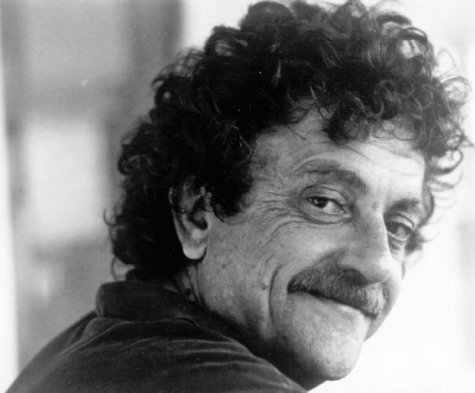
Remembering Kurt Vonnegut


Remembering Kurt Vonnegut
Today, the Web is full of tributes to Kurt Vonnegut, Jr, who died last night. There have been some 250 edits to his Wikipedia entry since his death. Boing Boing readers have sent in some of their tributes:

* The Books of Bokonon from Cat's Cradle, which include the Bokononist last rites:

God made mud.
God got lonesome.
So God said to some of the mud, "Sit up!"
"See all I've made," said God, "the hills, the sea, the sky, the stars."
And I was some of the mud that got to sit up and look around.
Lucky me, lucky mud.
I, mud, sat up and saw what a nice job God had done.
Nice going, God.

(Thanks, Dannel!)
* David posted an MP3: "This is a wonderful track of Kurt reading aloud, from an ancient audiobook of Slaughterhouse Five. It was set to music by parties unknown, and was a bonus track on a much newer audiobook (read by Ethan Hawke). Ethan's reading of the book is okay, but he can't match the author's perfect inflections. The file's a bit long but it's worth every second." Coral Cache Mirror, Original Link
* The Australian Broadcasting Corporation is collecting fan tributes -- someone should sent them this video montage of Vonnegut stills and clips (Thanks, Russ and Gary!)

See also:
Vonnegut on "Shock and Awe"

Update: Andrew sez, "Here is the audio of Vonnegut reading from Slaughterhouse without the (lame) music."

Michael sez, "This is one of my favorite Vonnegut quotes. I haven't seen it in the press anywhere but it seems appropriate to mention it now:"

Do you know what a Humanist is? I am honorary president of the American Humanist Association, having succeeded the late, great science fiction writer Isaac Asimov in that functionless capacity. We Humanists try to behave well without any expectation of rewards or punishments in an afterlife. We serve as best we can the only abstraction with which we have any real familiarity, which is our community.

We had a memorial services for Isaac a few years back, and at one point I said, "Isaac is up in Heaven now." It was the funniest thing I could have said to a group of Humanists. I rolled them in the aisles. It was several minutes before order could be restored. And if I should ever die, God forbid, I hope you will say, "Kurt is up in Heaven now." That's my favorite joke.

Jeremiah sez, "I interviewed Kurt Vonnegut years ago and had an interesting encounter with him."

And a reader sends in Vonnegut's Daily Show appearance.

posted by Cory Doctorow at 06:10:33 AM permalink | blogs' comments

Wednesday, April 11, 2007
Kurt Vonnegut, RIP

Kurt Vonnegut, one of the greatest American writers of the 20th century, is dead. Oh, shit. Vonnegut wrote 14 novels. He had fallen several weeks ago and received brain injuries. He was 84.

My first Vonnegut was Breakfast of Champions. I'd never read anything like it. It was a novel that was so easy, everything just happening, one thing after another. The book almost read itself. That was his gift, I think: to tell you things that were hard to hear, without you even noticing it. Like a nurse who can slide a needle into your vein without making you wince.

Vonnegut has haunted me, delighted me, and made me sad. I still think of the world in terms of Wampeters, Foma, and Karasses, the Boknonism ideas set out in Cat's Cradle. I still think that "Listen: Billy Pilgrim has come unstuck in time," may be the best opening line of any novel -- and that the novel, Slaughterhouse 5 lives up to that line.

In 1944 he was shipped to Europe with the 106th Infantry Division and shortly saw combat in the Battle of the Bulge. With his unit nearly destroyed, he wandered behind enemy lines for several days until he was captured and sent to a prisoner of war camp near Dresden, the architectural jewel of Germany.

Assigned by his captors to make vitamin supplements, he was working with other prisoners in an underground meat locker when British and American war planes started carpet bombing the city, creating a firestorm above him. The work detail saved his life.

Afterward, he and his fellow prisoners were assigned to remove the dead.

Link, Wikipedia bio (Thanks, Allen)

(Image ganked from Wikipedia)

Tip of the hat to Boing Boing

Monday, April 2, 2007

Martin Sheen Cited again for Nuke Site Trespass


Martin Sheen Cited again for Nuke Site Trespass
by Associated Press staff

http://www.commondreams.org/archive/2007/04/02/265/

MERCURY, Nev. - Martin Sheen was among a group of peace activists cited during an anti-nuclear protest Sunday at the Nevada Test Site, authorities said.Dozens of people took part in the rally sponsored by the Nevada Desert Experience outside the test site, 70 miles northwest of Las Vegas.

04/02 Organizers estimated the crowd size at 150, but Nye County Sheriff Tony DeMeo put the figure at about 75.

‘‘We are asking for nuclear disarmament and peace,” organizer Ming Lai said. ‘‘We are asking for the Nevada Test Site to stop doing the testing they’re doing. The only reason they’re doing it is to make bombs.”

A total of 39 protesters, including Sheen, were released after being cited by sheriff’s deputies for crossing onto test site property following the rally, test site spokesman Darwin Morgan said.

Sheen, who spent seven seasons playing President Josiah Bartlet on the TV drama series ‘‘The West Wing,” has received similar citations at the test site in the past.

Also cited was retired Army Col. Ann Wright, who resigned as a senior diplomat at the U.S. Embassy in Mongolia in 2003 to protest the Iraq war.

Citations also were issued to Shoshone Nation leader Carrie Dann of Nevada and Roman Catholic priest Louis Vitale of the San Francisco Bay area.

The protest, which featured speeches and folk music, culminated a weeklong march to the site from Las Vegas by demonstrators.

DeMeo said many protesters, including Sheen, complimented sheriff’s deputies for their handling of the citations, he said.

‘‘They’re very respectful to us and we’re that way to them,” the sheriff said. ‘‘They get their point across, get the citations and then they’re on their way.”

The sprawling test site is where the federal government conducted above- and below-ground nuclear detonations from 1951 to 1992. It remains the site of non-nuclear government tests on radioactive materials.

A similar rally drew about 35 demonstrators to the test site last year, including 21 who were cited for trespassing.

Friday, March 30, 2007

A special train connecting Buddhist circuit

A special train connecting Buddhist circuit
http://www.hindu.com/thehindu/holnus/002200703251118.htm

New Delhi, March. 25 (PTI): Religious tourism in the country is set to get a boost with the introduction of a special train that connects several prominent Buddhist pilgrim centres in India and Lumbini in Nepal.

Christened 'Mahaparinirvana Special', the train will be flagged off by Railway Minister Lalu Prasad on March 28 at the Safdarjung railway station here.

The train is aimed at promoting Buddhist tourism in the country and targets tourists from South East Asian nations like Singapore, Thailand, Vietnam and Sri Lanka, said Indian Railway Catering and Tourism Corporation (IRCTC) officials.

The train would cover religious centres like Bodh Gaya, Nalanda, Rajgir, Varanasi, Shravasti besides Taj Mahal and Fatehpur Sikri in a week.

The fully air-conditioned train offers a complete package with facilities like plush accommodation, food in star hotels and road travel by luxury buses, the officials said.

Besides, the foreign tourists would also be helped in getting visa.

"The USP of the train is that every thing is taken care of once the tourists board the train. It will be a pleasant experience to them," said A Brar, Group General Manager (Tourism and Marketing) of IRCTC.

The train also offers attractive fare structure. From October to March the fare is USD 150 per day per passenger in first AC, USD 105 in second AC and USD 88 in AC three-tier.

The fare is relatively cheaper during April-September. It is USD 140 per day per passenger in first AC, USD 98 in second AC and USD 80 in AC three-tier.

Another source of information on the eight places of Buddhist Pilgrimage
The Eight Places of Buddhist Pilgrimage
Jeremy Russell

Back to Pilgrimage Index


First published in 1981 by Mahayana Publications, Tushita Mahayana Meditation Centre. This article first appeared in Teachings from Tushita, Journal of Tushita Mahayana Meditation Centre.

Born and educated in England, Jeremy Russell’s interest in Buddhism was initially sparked during his first visit to Dharamsala in the early 70. He subsequently studied at the Library of Tibetan Works & Archives for several years. He has lived in Dharamsala with his family since 1981, dividing his time between working as an editor for several offices of the Tibetan government-in-exile and leading trekking groups into the nearby mountains. He is editor of Chö-Yang, the Journal of Tibetan Culture.

Contents

1. Introduction
2. Lumbini—birthplace of the Buddha
3. Bodhgaya—site of Buddha's enlightenment
4. Sarnath—first turning of the Wheel of Dharma
5. Rajgir—second turning of the Wheel of Dharma
6. Shravasti—teachings in the Jetavana Grove
7. Sankashya—where Lord Buddha descended from Tushita Heaven
8. Nalanda—site of the great monastic university
9. Kushinagar—where Buddha entered mahaparinirvana
10. Conclusion and Books Consulted

Introduction

Across the world and throughout the ages, religious people have made pilgrimages. The Buddha himself exhorted his followers to visit what are now known as the four great places of pilgrimage: Lumbini, Bodhgaya, Sarnath and Kushinagar. Many great teachers of the buddhist tradition maintained the practice of pilgrimage and paying respect to the holy sites. Nagarjuna, father of the mahayana, restored the temple in Bodhgaya and protected the bodhi tree, while the great Indian master Atisha, later on as important as Nagarjuna to the Tibetan tradition, also often visited Bodhgaya and indeed attained many realizations there.

Of the many places in northern India associated with the Buddha, eight in particular have become special objects of pilgrimage: the four great places above, and four others, namely, Rajgir, Shravasti, Sankashya and Nalanda, each of which is regarded as having been blessed by the Buddha. After the Buddha's passing away and the cremation of his body, the relics were divided into eight portions and various beings erected a great stupa over each. So arose the tradition of eight places of pilgrimage.

The actions of the Buddha in each of these places, recalling which is an important aspect of making pilgrimage, are described within the canons of the scriptures of the various traditions of his teaching, such as the sections on Vinaya, and also in various compendia describing his life. The sites themselves have now been identified once more with the aid of records left by three pilgrims of the past. The great Emperor Ashoka, although initially opposed to Buddhism, later became a zealous follower who in the second decade of his reign made a great pilgrimage to numerous buddhist shrines. As well as other buildings, he left inscribed pillars at each site to indicate the significance of each place. Many remains of these ancient structures survive even today.

In the early fifth century AD, the Chinese pilgrim Fa Hien walked from China to India in search of buddhist books on discipline, the Vinaya. He was followed two centuries later by Hsuan Chwang. Records of the travels of both, which contain detailed accounts of the holy places they visited, have survived in Chinese. Translated into English in the last century, they are now available in most western languages.

The practice of Buddhism flourished long in India, perhaps reaching a zenith in the seventh century AD, at which time the Buddha's teaching began to be firmly established in Tibet. After this it began to decline because of the invading muslim armies, and by the twelfth century the practice of the Dharma had become sparse in its homeland. Thus, the history of the eight places of pilgrimage from the thirteenth to the mid-nineteenth centuries is obscure and they were mostly forgotten. However, it is remarkable that they all remained virtually undisturbed by the conflicts and developments of society during that period. Subject only to the decay of time they remained dormant, waiting for rediscovery.

From the middle of the last century, the Archeological Survey of India, under the auspices of the British Government, and one Englishman in particular—General Sir Alexander Cunningham—unearthed and identified many sites, including the eight places of pilgrimage. Since that time, owing to a renewed Indian interest in Buddhism and the devotion and hardship of many individuals, the pilgrimage sites have been revived. Now, two and a half millennia after the Buddha, there are once more active buddhist establishments and practitioners of the Dharma from many lands resident in all but one of the eight places.

The following account is intended less to present a purely historical record of the places of pilgrimage than to offer some information and perhaps inspiration to other pilgrims, with the wish that this revival may increase.

Tuesday, March 27, 2007

Coffins starting to be made of Paper- a Recycling boon

Namaste,

Yesterday I found out about coffins made out of paper, but when I tried to post, the posts came out in Hindi font. I had my settings set wrong on my blog settings. But today I found the similar story on Boing Boing. Now I can copy and past for those of us that don't read Hindi (that includes me) I will include the links from Weird Asian sites where I first found the story, yesterday. But back to todays Vision.


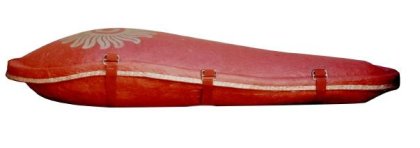
Coffin made from recycled paper


EcoPods are environmentally friendly coffins made from recycled paper. Whether you're worried about the state of the planet, or just want to be sure that you'll have an easy climb back out of the grave, should the zombiism take hold, this seems like a good idea.

Ecopod is a revolutionary design in coffins made from naturally hardened, 100% recycled paper. The time and consideration gone into the concept and design of the Ecopod we feel has culminated in a product with much to offer.

Made from 100% ecologically sound materials the Ecopod is the ideal product for a non toxic burial or cremation. Perfect for use in greenfield sites.

Also from China
The Hong Kong Food and Environmental Hygiene Department is planning to introduce coffins made of recycled paper, which have multiple advantages over the traditional wooden coffins in terms of cost, time and energy consumption.

Currently, the average waiting period for cremation is 15 days.

But if paper coffins are adopted, it may cut the waiting period to only one day, said the department.

Also, a paper coffin costs several hundred Hong Kong dollars, whereas a traditional wooden coffin costs several thousand dollars.

Admitting it's probably difficult to change a tradition, the department said it would start using paper coffins with unclaimed bodies.

http://ecopod.co.uk/
http://www.weirdasianews.com/2007/03/06/hong-kong-to-begin-burying-people-wrapped-in-paper/