Friday, June 8, 2007

Beer + Sunshine = Hot Water

Beer + Sunshine = Hot Water
Friday, June 8th, 2007
http://www.weirdasianews.com/2007/06/08/


A Chinese farmer has made his own solar-powered water heater out of beer bottles and hosepipes.

“I invented this for my mother. I wanted her to shower comfortably,” says Ma Yanjun, of Qiqiao village, Shaanxi province.

Ma’s invention features 66 beer bottles attached to a board. The bottles are connected to each other so that water flows through them.

Sunlight heats the water as is passes slowly through the bottles before flowing into the bathroom as hot water, reports China Economy Network.

Ma says it provides enough hot water for all three members of his family to have a shower every day.

And more than 10 families in the village have already followed suit and installed their own versions of Ma’s invention.

Thursday, June 7, 2007

Fifties housewives' tarot deck (predict casseroles, aprons, A-bombs)

Fifties housewives' tarot deck (predict casseroles, aprons, A-bombs)

Link to Neatorama post, here's the deck itself (gah, Flash with complicated popup windows, my crappy Guatemalan wifi connection is choking), designed by Headcase. (Thanks, Mike D.)

Tuesday, June 5, 2007

Smithsonian: Robert Lang, physicist, origamist

Smithsonian: Robert Lang, physicist, origamist
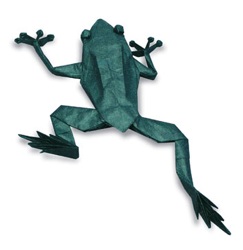
The new issue of Smithosinian magazine profiles Robert Lang, physicist and pioneer of technical and computational origami. From the article:


Images Articles 2007 Jun Origami-FrogNo one knows for sure when or where paper folding originated, but it seems to have been well established by the 1600s in Japan, where messages of good luck and prosperity have long been folded into ceremonial pieces. There was also an independent tradition of paper folding in Europe. But until the mid-20th century, practitioners had been limited to only a few hundred classic and oft-repeated designs. Then, in the 1950s, new techniques and designs created by Japanese origami artist Akira Yoshizawa started being published and exhibited. Soon after, experts began working on the mathematics that would allow the design and computation of abstract geometric shapes in folded paper. Lang and others use analytical geometry, linear algebra, calculus and graph theory to solve origami problems.

In the early '90s, Lang and Japanese origami master Toshiyuki Meguro simultaneously hit on a technique that has revolutionized folding. Now called "circle-river packing," the technique allowed origamists to do something that had always eluded them—create models with realistic appendages in specific spots. Each of a design's "flaps"—an area of the paper that is to become a leg or an antenna, for instance—is represented by a circle or a strip. Circles are drawn, or "packed," onto a square piece of paper, like oranges in a crate, with no overlap. The spaces between the circles may contain strips, or rivers, hence the name, circle-river packing. For the first time, designs that existed only in the mind's eye could be reliably reproduced without endless—and sometimes fruitless—trial and error.

Link
• Robert Lang's Insect Origami Link
• Curved tetrahedron origami Link
• All shapes in origami Link

China Gives Scary Stories a Death Note

China Gives Scary Stories a Death Note


China has launched a crackdown on scary children’s stories including the popular Japanese “Death Note” comic book series, state media said Saturday.

Authorities are ordered to seize “illegal terrifying publications” from vendors ahead of China’s Children’s Day on June 1, the Xinhua News Agency and China Daily newspaper reported.

Communist authorities regularly launch sweeps to seize publications deemed pornographic or socially harmful. They are especially concerned about the influence of foreign books, movies and other pop culture on Chinese children.

One target in the latest crackdown is “Death Note,” a Japanese series of comic books about a notebook that can kill people whose names are written in it.

The story “misleads innocent children and distorts their mind and spirit,” said Wang Song, an official of the National Anti-piracy and Anti-pornography Working Committee, quoted by the China Daily.

“Death Note” publications have been seized in Shanghai and areas across central and southern China, the newspaper said.

Japanese Ice Cream Cone Pizza


Japanese Ice Cream Cone Pizza
Tuesday, May 29th, 2007


Kono Pizza, a fast food restaurant is offering its customers pizza in a cone.

Instead of preparing toppings on a traditional flat crust, the toppings are placed inside a cone shaped crust (think an ice cream cone) and then baked.

The reasoning behind this strange creation is that cone pizza eliminates the mess and need for silverware that traditional pizza slices require. Cone Pizza can be eaten on the run.

Kono Pizza offers customers 7 different types of pizza cones and 2 dessert cones. Pizza cones are prepared freshly and cooked on site in a specially designed conveyor belt oven.

Kono Pizza currently has 5 stores in Tokyo and 1 in Nagoya.

Monday, June 4, 2007

Winners and losers as India booms


Winners and losers as India booms

http://news.bbc.co.uk/2/hi/business/6677645.stm
By Karishma Vaswani
Business correspondent, BBC News, Mumbai

On a dry, arid patch of land in Western India, a group of farmers make a political and economic statement - we are selling our farms, they say.

Indian cotton farmer and his sons at Yavatmal outside Nagpur

Many farmers have been hit hard by globalisation
Under the searing heat of the Indian sun, the head of the village, Dharampul Jarundhe, whose family has farmed for generations, wipes the drops of sweat from his brow.

"No more agriculture for us", he says. "It doesn't feed us, it doesn't feed our children. We will move to the cities and work as tea bearers, and live in Mumbai's slums if we have to - it is better than starving."

Seventy per cent of India's people make their living on the land. Millions of farmers, spread out across rural India, have had to watch the value of their products depreciate on the international markets.


There is a segment that is growing up in India right now that is ready to reap the benefits of what globalisation truly is
Pavithra Suryanarayan, independent economist.
A lack of subsidies mean they are at the mercy of the whims and fancies of economic terms like the demand and supply curve, subjects they never studied in school, phrases they don't understand.

All they know is that they are caught in the cycle of debt and drought, and year after year life gets worse.

Higher expectations

Like many of India's farmers, Dharampal has heard the legendary tales of Mumbai. In the village next to his, there is cable television, brought thanks to the growing incomes of some of the villager's young who have gone to India's financial capital to make a living.

People in rural India

The gap between rural and urban India is enormous
On the TV sets, images of a rich, urban, glittering India are beamed into the tiny mud-patched homes of the Indian countryside, fuelling resentment, giving rise to an unimaginable fury that has manifested itself in demonstrations and protests scattered across the nation.

Critics of globalisation say the forces of free market style economics are to blame for the rising income inequality between the India of the haves, and the India of the have-nots.

"Is this what you call progress?" asks Jaideep Hardlikar, a farmer activist and a journalist. "I think it's loot by a few of the majority.

"No doubt software professionals are earning money their fathers and forefathers had never ever imagined in their life., but the kind of deprivation you see in parts of India that were once prosperous is shocking and unfathomable."


I am making more money than my parents could have ever dreamed of, and as an Indian woman that is so totally liberating
Devika, call centre worker, Mumbai

But economists say that globalisation is a useful bogeyman and should not be blamed for India's ills.

"This is not the fault of globalisation," scoffs Pavithra Suryanarayan, an independent economist.

Garuda shopping mall, Bangalore
Shopping malls have proliferated in India's cities


"Arguably, even if India had never liberalised, you would have seen the same results.

It is the fault of a lack of reforms in the agricultural sector. You cannot blame the faults of the government on globalisation. It is a convenient phrase that is bandied about and blamed for everything."

Big benefits

During loud protests on the streets of Delhi outside parliament house, globalisation gets blamed a lot.

It is the reason that many say India's social and cultural values are being eroded. It is what small shopkeepers say is bringing in American supermarket chains like Wal-Mart to India, threatening their livelihoods. And it is what is being blamed for rising pollution levels in the country, as a result of rapid industrialisation.

Software company in Bangalore
India's outsourcing industry has produced wealth for some

But ask 25-year-old Devika, who works at a call centre in Mumbai, whether her life has been changed for the better because of the free market and she will give you a resounding yes.

"It's a cliché now, isn't it, but it's still true. I am making more money than my parents could have ever dreamed of, and as an Indian woman that is so totally liberating.

"I don't need to depend on my parents for money, I don't need to depend on a husband for money. I can choose to get married later if I want to. I may not even need to get married. The opportunities that have opened up for me are mind-boggling."

Ms Suryanarayan agrees.

"There is a segment that is growing up in India right now that is ready to reap the benefits of what globalisation truly is, and what it can do," she says.

"They can tap into global markets, they are being given opportunities now to be part of a really global world. It is this generation in India that will see the benefits of a globalised economy."

Balancing the opportunities of the haves with the misfortunes of the have-nots, though, will be a priority for India as its economy develops.

Sunday, June 3, 2007

Chinese man washes hair for first time in 26 years


Chinese man washes hair for first time in 26 years

http://www.weirdasianews.com/2006/10/18/man-how-smelly-will-that-be/

80 year-old Mr. Luo lives in the little village of Chong Qing city in China. Wildly enough, he hasn’t washed or cut his hair or beard for more than 26 years.

His hair grew to 2 meters long and his beard was 1.5 meters.For the first time in 26 years, he decided to give himself a new look for a local animal sports event.

All the townspeople lined up to give him a hand. After many failed attempts using regular shampoo, they spent a total of 5 hours and 3 packs of laundry detergent to wash him clean.


In the end, Mr. Luo was a very happy man.