A special train connecting Buddhist circuit
http://www.hindu.com/thehindu/holnus/002200703251118.htm
New Delhi, March. 25 (PTI): Religious tourism in the country is set to get a boost with the introduction of a special train that connects several prominent Buddhist pilgrim centres in India and Lumbini in Nepal.
Christened 'Mahaparinirvana Special', the train will be flagged off by Railway Minister Lalu Prasad on March 28 at the Safdarjung railway station here.
The train is aimed at promoting Buddhist tourism in the country and targets tourists from South East Asian nations like Singapore, Thailand, Vietnam and Sri Lanka, said Indian Railway Catering and Tourism Corporation (IRCTC) officials.
The train would cover religious centres like Bodh Gaya, Nalanda, Rajgir, Varanasi, Shravasti besides Taj Mahal and Fatehpur Sikri in a week.
The fully air-conditioned train offers a complete package with facilities like plush accommodation, food in star hotels and road travel by luxury buses, the officials said.
Besides, the foreign tourists would also be helped in getting visa.
"The USP of the train is that every thing is taken care of once the tourists board the train. It will be a pleasant experience to them," said A Brar, Group General Manager (Tourism and Marketing) of IRCTC.
The train also offers attractive fare structure. From October to March the fare is USD 150 per day per passenger in first AC, USD 105 in second AC and USD 88 in AC three-tier.
The fare is relatively cheaper during April-September. It is USD 140 per day per passenger in first AC, USD 98 in second AC and USD 80 in AC three-tier.
Another source of information on the eight places of Buddhist Pilgrimage
The Eight Places of Buddhist Pilgrimage
Jeremy Russell
Back to Pilgrimage Index
First published in 1981 by Mahayana Publications, Tushita Mahayana Meditation Centre. This article first appeared in Teachings from Tushita, Journal of Tushita Mahayana Meditation Centre.
Born and educated in England, Jeremy Russell’s interest in Buddhism was initially sparked during his first visit to Dharamsala in the early 70. He subsequently studied at the Library of Tibetan Works & Archives for several years. He has lived in Dharamsala with his family since 1981, dividing his time between working as an editor for several offices of the Tibetan government-in-exile and leading trekking groups into the nearby mountains. He is editor of Chö-Yang, the Journal of Tibetan Culture.
Contents
1. Introduction
2. Lumbini—birthplace of the Buddha
3. Bodhgaya—site of Buddha's enlightenment
4. Sarnath—first turning of the Wheel of Dharma
5. Rajgir—second turning of the Wheel of Dharma
6. Shravasti—teachings in the Jetavana Grove
7. Sankashya—where Lord Buddha descended from Tushita Heaven
8. Nalanda—site of the great monastic university
9. Kushinagar—where Buddha entered mahaparinirvana
10. Conclusion and Books Consulted
Introduction
Across the world and throughout the ages, religious people have made pilgrimages. The Buddha himself exhorted his followers to visit what are now known as the four great places of pilgrimage: Lumbini, Bodhgaya, Sarnath and Kushinagar. Many great teachers of the buddhist tradition maintained the practice of pilgrimage and paying respect to the holy sites. Nagarjuna, father of the mahayana, restored the temple in Bodhgaya and protected the bodhi tree, while the great Indian master Atisha, later on as important as Nagarjuna to the Tibetan tradition, also often visited Bodhgaya and indeed attained many realizations there.
Of the many places in northern India associated with the Buddha, eight in particular have become special objects of pilgrimage: the four great places above, and four others, namely, Rajgir, Shravasti, Sankashya and Nalanda, each of which is regarded as having been blessed by the Buddha. After the Buddha's passing away and the cremation of his body, the relics were divided into eight portions and various beings erected a great stupa over each. So arose the tradition of eight places of pilgrimage.
The actions of the Buddha in each of these places, recalling which is an important aspect of making pilgrimage, are described within the canons of the scriptures of the various traditions of his teaching, such as the sections on Vinaya, and also in various compendia describing his life. The sites themselves have now been identified once more with the aid of records left by three pilgrims of the past. The great Emperor Ashoka, although initially opposed to Buddhism, later became a zealous follower who in the second decade of his reign made a great pilgrimage to numerous buddhist shrines. As well as other buildings, he left inscribed pillars at each site to indicate the significance of each place. Many remains of these ancient structures survive even today.
In the early fifth century AD, the Chinese pilgrim Fa Hien walked from China to India in search of buddhist books on discipline, the Vinaya. He was followed two centuries later by Hsuan Chwang. Records of the travels of both, which contain detailed accounts of the holy places they visited, have survived in Chinese. Translated into English in the last century, they are now available in most western languages.
The practice of Buddhism flourished long in India, perhaps reaching a zenith in the seventh century AD, at which time the Buddha's teaching began to be firmly established in Tibet. After this it began to decline because of the invading muslim armies, and by the twelfth century the practice of the Dharma had become sparse in its homeland. Thus, the history of the eight places of pilgrimage from the thirteenth to the mid-nineteenth centuries is obscure and they were mostly forgotten. However, it is remarkable that they all remained virtually undisturbed by the conflicts and developments of society during that period. Subject only to the decay of time they remained dormant, waiting for rediscovery.
From the middle of the last century, the Archeological Survey of India, under the auspices of the British Government, and one Englishman in particular—General Sir Alexander Cunningham—unearthed and identified many sites, including the eight places of pilgrimage. Since that time, owing to a renewed Indian interest in Buddhism and the devotion and hardship of many individuals, the pilgrimage sites have been revived. Now, two and a half millennia after the Buddha, there are once more active buddhist establishments and practitioners of the Dharma from many lands resident in all but one of the eight places.
The following account is intended less to present a purely historical record of the places of pilgrimage than to offer some information and perhaps inspiration to other pilgrims, with the wish that this revival may increase.
Friday, March 30, 2007

Tuesday, March 27, 2007
Coffins starting to be made of Paper- a Recycling boon
Namaste,
Yesterday I found out about coffins made out of paper, but when I tried to post, the posts came out in Hindi font. I had my settings set wrong on my blog settings. But today I found the similar story on Boing Boing. Now I can copy and past for those of us that don't read Hindi (that includes me) I will include the links from Weird Asian sites where I first found the story, yesterday. But back to todays Vision.

Coffin made from recycled paper
EcoPods are environmentally friendly coffins made from recycled paper. Whether you're worried about the state of the planet, or just want to be sure that you'll have an easy climb back out of the grave, should the zombiism take hold, this seems like a good idea.
Ecopod is a revolutionary design in coffins made from naturally hardened, 100% recycled paper. The time and consideration gone into the concept and design of the Ecopod we feel has culminated in a product with much to offer.
Made from 100% ecologically sound materials the Ecopod is the ideal product for a non toxic burial or cremation. Perfect for use in greenfield sites.
Also from China
The Hong Kong Food and Environmental Hygiene Department is planning to introduce coffins made of recycled paper, which have multiple advantages over the traditional wooden coffins in terms of cost, time and energy consumption.
Currently, the average waiting period for cremation is 15 days.
But if paper coffins are adopted, it may cut the waiting period to only one day, said the department.
Also, a paper coffin costs several hundred Hong Kong dollars, whereas a traditional wooden coffin costs several thousand dollars.
Admitting it's probably difficult to change a tradition, the department said it would start using paper coffins with unclaimed bodies.
http://ecopod.co.uk/
http://www.weirdasianews.com/2007/03/06/hong-kong-to-begin-burying-people-wrapped-in-paper/
Yesterday I found out about coffins made out of paper, but when I tried to post, the posts came out in Hindi font. I had my settings set wrong on my blog settings. But today I found the similar story on Boing Boing. Now I can copy and past for those of us that don't read Hindi (that includes me) I will include the links from Weird Asian sites where I first found the story, yesterday. But back to todays Vision.
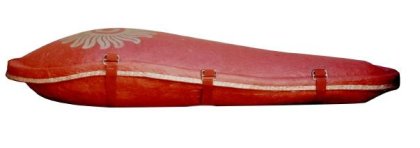
Coffin made from recycled paper
EcoPods are environmentally friendly coffins made from recycled paper. Whether you're worried about the state of the planet, or just want to be sure that you'll have an easy climb back out of the grave, should the zombiism take hold, this seems like a good idea.
Ecopod is a revolutionary design in coffins made from naturally hardened, 100% recycled paper. The time and consideration gone into the concept and design of the Ecopod we feel has culminated in a product with much to offer.
Made from 100% ecologically sound materials the Ecopod is the ideal product for a non toxic burial or cremation. Perfect for use in greenfield sites.
Also from China
The Hong Kong Food and Environmental Hygiene Department is planning to introduce coffins made of recycled paper, which have multiple advantages over the traditional wooden coffins in terms of cost, time and energy consumption.
Currently, the average waiting period for cremation is 15 days.
But if paper coffins are adopted, it may cut the waiting period to only one day, said the department.
Also, a paper coffin costs several hundred Hong Kong dollars, whereas a traditional wooden coffin costs several thousand dollars.
Admitting it's probably difficult to change a tradition, the department said it would start using paper coffins with unclaimed bodies.
http://ecopod.co.uk/
http://www.weirdasianews.com/2007/03/06/hong-kong-to-begin-burying-people-wrapped-in-paper/
Saturday, March 24, 2007
Chinese MMO offers accounts to banned players who donate blood

This is not for the faint of heart, but it is true, and I think that it is a good idea with the problem that the Chinese have had with their tainted blood supplies and their HIV crisis
Peace, gregor
The makers of China's popular MMO Cabal told banned players that they could get back into the game if they donated blood.
http://www.weirdasianews.com/2007/03/20/online-gamers-can-now-pay-with-their-blood/
An online game operator has demanded that banned players donate blood to be allowed back into the game. Moliyo, which runs a 3D massively multiplayer online game in China, made the demand after banning 120,000 players who attempted to hack the game.
More than 100 players had already signed up to exchange half a litre (1 pint) of blood for game accounts. The company has also offered free accounts to ordinary players who give blood...
Chinese hospitals have had increasing difficulty attracting blood donors in recent years after scandals in which thousands of donors and blood recipients contracted HIV, the virus which causes AIDS. Blood donors in China are usually paid about 12 dollars per donation.
Thursday, March 22, 2007
The confluence of the Ganga & the Yamuna river

The confluence of the Ganga (brown colour) & the Yamuna (green colour) river in Allahabad .
A popular spot to perform some 'Nariyal' puja for a small fee ... & the ground for the 12-year Khumb Mela.
This is what Mark Twain wrote after a visit in 1895 :
...From the lofty ramparts one has a fine view of the sacred rivers.
They join at that point - the pale blue Jumna, apparently clean and clear,
and the muddy Ganges, dull yellow and not clean...
· Date: Wed May 4, 2005 ·

Evening at Ganga
Date: Mon November 20, 2006
Just a couple photos of the river of life also know as the Gauga
Wish I floating along the Ganges, metta,gregor
Wednesday, March 21, 2007
Done with my Move and back to selected sights
Namaste and Welcome Back to me,
I am returning to posting after a sabbatical due to moving and illness I am back.
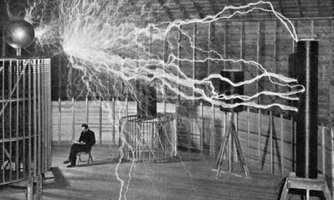
Nikola Tesla is one of my hero's for an interesting link to The Electric Wizard( Factoid Tesla always kept one hand in a pants pocket, to prevent electrocution) visit http://forteantimes.com/articles/217_tesla_1.shtml or you can visit the Wikipedia article at http://en.wikipedia.org/wiki/Nikola_Tesla
Tesla has received many recognitions within Serbia. He is featured on the current 100 Serbian dinar note

According to Wikipedia "Nikola Tesla (Serbian: Никола Тесла) (10 July 1856 - 7 January 1943) was a world-renowned inventor, physicist, mechanical engineer and electrical engineer. He was born an ethnic Serb citizen of the Austrian Empire and later became an American citizen. Tesla was a brilliant man who spoke a dozen languages including Italian, French, German, English in addition to his own native language. He is best known for his revolutionary work in, and numerous contributions to, the discipline of electricity and magnetism in the late 19th and early 20th century. Tesla's patents and theoretical work formed the basis of modern alternating current electric power (AC) systems, including the polyphase power distribution systems and the AC motor, with which he helped usher in the Second Industrial Revolution.
After his demonstration of wireless communication in 1893 and after being the victor in the "War of Currents", he was widely respected as America's greatest electrical engineer. Much of his early work pioneered modern electrical engineering and many of his discoveries were of groundbreaking importance. In the United States, Tesla's fame rivaled that of any other inventor or scientist in history or popular culture, but due to his eccentric personality and, at the time, unbelievable and sometimes bizarre claims about possible scientific and technological developments, Tesla was ultimately ostracized and regarded as a mad scientist.[5][6] Never putting much focus on his finances, Tesla died impoverished and forgotten at the age of 86.
The SI unit measuring magnetic flux density or magnetic induction (commonly known as the magnetic field B\,), the tesla, was named in his honour (at the Conférence Générale des Poids et Mesures, Paris, 1960).
Aside from his work on electromagnetism and engineering, Tesla is said to have contributed in varying degrees to the establishment of robotics, remote control, radar and computer science and to the expansion of ballistics, nuclear physics and theoretical physics. In 1943, the Supreme Court of the United States credited him as being the inventor of the radio. Many of his achievements have been used, with some controversy, to support various pseudosciences, UFO theories and new age occultism. Contemporary researchers of Tesla have deemed him "the man who invented the twentieth century"[7] and "the patron saint of modern electricity."
Unfortunately the Nikola Tesla museum in Colorado Springs, CO has been closed after priceless inventions created by genius Nikola Tesla have reportedly been stolen from the Tesla Museum in Colorado Springs, CO. According to news reports, the museum has been closed since December 1998, when Tesla Society members declared bankruptcy.
I had a chance to visit the museum in the early 1980's and it was a treasure trove of amazing inventions. One of the amazing inventions was a conveyor belt into trash was dumped and anything aluminum floated about 18 inches above the belt making separation of trash and aluminum a snap. An volunteer at the museum said that some came in and say the conveyor belt setup and studied in endless for a couple weeks, and then took the idea and patented under his name as a Aluminum separator and sold the patent for multi million dollars to the recycling industry.
Thanks all for today, hope that I am on the path to daily blogging once again.
Monday, February 12, 2007
Thursday, January 25, 2007
Back One day
Back less than one day, hope to have photos soon, friends are sending, since my $2,000 camera and gear went belly up first time I tried to take photo in India. Kept getting cf errors, when tried to format card got cf error 99 (contact dealer) I will for sure shortly. Son has video, that we need to clean up and put on line.
type at you soon gregor
type at you soon gregor
Subscribe to:
Posts (Atom)

 Posts
Posts


